Education & Advice
The $300 Tiffany Ring That Wasn't Worth $300
Sometimes a deal is just a deal. And sometimes it's an expensive lesson in why cheap luxury isn't actually cheap.

David Martinez
Jewelry Collector & Enthusiast
October 20, 2024
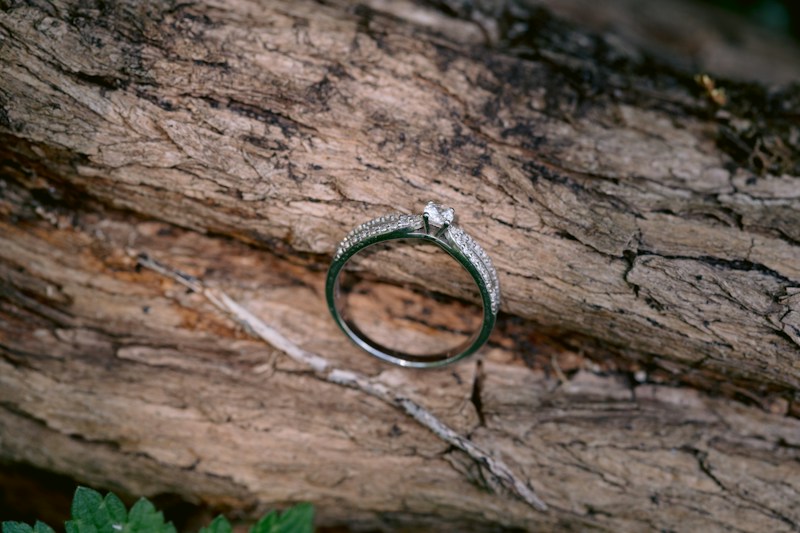
$300 for a Tiffany ring. Facebook Marketplace. The seller had other Tiffany pieces listed, seemed legitimate, and I was feeling lazy.
What could go wrong?
The Red Flags I Ignored
Looking back, the warnings were everywhere.
No original box. "Lost it during a move." Sure.
No receipt. "Bought it years ago, didn't keep paperwork." Okay.
Price was about 60% below what comparable pieces sold for on authenticated platforms. "Just want it gone." Right.
Photos were slightly blurry. "Phone camera isn't great." Uh huh.
I knew better. I know the authentication markers for Tiffany. I know what a fair price looks like. I know that legitimate sellers on unregulated platforms exist, but they're rare.
But $300. For a ring that normally goes for $750-900 pre-owned. The greed part of my brain overrode the smart part.
I Venmo'd the money and waited.
What Arrived
A ring arrived. Silver-colored. The right general shape and size.
But the moment I held it, something felt wrong. Too light. The band width was slightly off—maybe half a millimeter, but enough to notice if you've handled real Tiffany.
I looked at the hallmarks. "925" and "Tiffany & Co." Both present. Both looked reasonable in photos.
Under magnification? The "Tiffany & Co." was too shallow. The font spacing was slightly compressed. And there was a tiny tool mark near the stamp—the kind of imperfection that real Tiffany quality control would never let through.
Counterfeit.
The Real Cost
Here's where it gets worse.
I contacted the seller. No response. Tried again. Nothing. Reported to Facebook—got an automated response. The seller's account disappeared within two days.
So I was out $300, plus I now owned a fake ring that I couldn't sell (legally or ethically).
But wait, there's more.
I'd been so excited about my "deal" that I mentioned it to a friend. She got interested. Found a similar listing. Was about to buy when I texted her that mine was fake.
I caught her in time. But what if I hadn't? What if I'd accidentally led someone else into the same trap?
The guilt was almost worse than the lost money.
What $300 Actually Buys
Let's do the math on what $300 gets you in the legitimate pre-owned market.
On Fashionphile right now:
- Tiffany Return to Tiffany heart tag pendant: $195
- Tiffany 1837 interlocking circles pendant: $225
- Tiffany Elsa Peretti open heart pendant: $275
These are real. Authenticated. Guaranteed. Returnable if there's a problem.
On The RealReal:
- Various authentic Tiffany rings in the $150-350 range
- Sterling silver pieces, authenticated
- Full return policy
The "deal" I thought I was getting wasn't even a good deal if it had been real. For $300 in the right place, I could have bought something authentic, had it shipped with insurance, and been protected if anything went wrong.
Instead I have a fake ring in a drawer that I occasionally look at to remind myself not to be an idiot.
The Lesson (Because There Has To Be One)
The pre-owned luxury market has actual deals. Real savings. Legitimate opportunities to buy authenticated pieces below retail.
But "below market" and "too good to be true" are different things.
Fashionphile prices Van Cleef Alhambra at 75-85% of retail. The RealReal might be 65-75%. These are deals. 30-40% savings on identical quality, with authentication guarantees.
A random seller offering 60% off with no authentication, no paperwork, no return policy? That's not a deal. That's a gamble.
And here's the thing about gambling: the house always has better odds than you do. In this case, the "house" is a network of counterfeiters who've gotten very, very good at making things that look right in photos.
What I Do Now
I have a rule. Unbreakable.
If I can't verify it before I buy it, I don't buy it.
That means authenticated platforms. That means established auction houses. That means dealers with reputations to protect.
Yes, this costs more. The $195 Fashionphile pendant costs more than the $120 Facebook Marketplace pendant. But the $195 pendant is real, and the $120 one probably isn't.
The $300 lesson I paid for? Cheaper than the mistakes some people make. I've heard of fake Love bracelets sold for $4,000. Counterfeit Van Cleef going for $3,500. At least my tuition was relatively affordable.
But I'd rather not have paid it at all.
The drawer with the fake ring stays closed now. But I keep it. A reminder that in luxury, just like everything else, you get what you pay for.
And sometimes, you get less.
Continue Reading
Explore Pre-Owned Tiffany Co
Authenticated pieces from our trusted partners — curated for collectors and first-time buyers alike.
About The Author
David Martinez
Contributing Writer · Jewelry Collector & Enthusiast
Miami, FL
David is an avid jewelry collector and writer who has spent over $100,000 on pre-owned luxury pieces. He shares his personal buying experiences and hard-earned lessons with our readers.
All content is reviewed by our editorial team for accuracy.Meet all our experts →
Discussion
Reader Comments
0 replies
Be The First
No comments yet. Start the conversation — your voice opens the floor.