Designer Spotlight
My Grandmother's Bulgari Taught Me Everything About Buying Vintage
When I inherited her Serpenti bracelet, I thought I knew what I had. I was wrong—in the best possible way.

Sophie Laurent
Former Brand Specialist
October 28, 2024
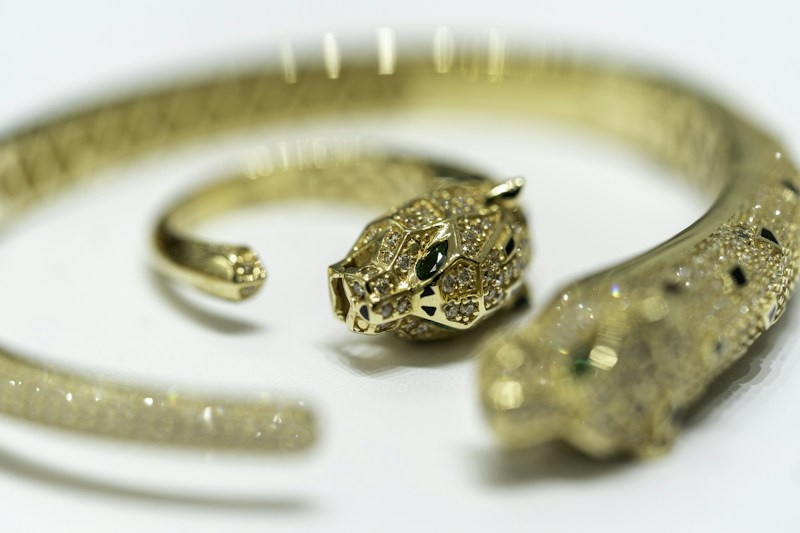
A Bulgari Serpenti. Yellow gold, with emerald eyes on the snake head. She bought it in Rome in 1978, on her honeymoon with my grandfather. Never took it off, not really. Even when she was in the hospital at the end, it was there on her wrist.
She left it to me. And that inheritance taught me more about vintage jewelry than any guide I've ever read.
What I Thought I Knew
When the bracelet came to me, I was already pretty familiar with Bulgari. I'd been researching pre-owned luxury jewelry for a while. I knew the Serpenti collection, knew the general value ranges, understood authentication basics.
So I looked at my grandmother's bracelet and made some assumptions.
The gold seemed worn. Forty years of daily wear—of course it would be. The snake scales had lost their sharp definition in places. The clasp was a little stiff.
I figured I had a nice heirloom, worth maybe $8,000-10,000 based on the comparable pieces I'd seen online. Sentimental value, sure. But not museum-quality.
Then I took it for professional appraisal.
The Education Began
The appraiser was a quiet woman who'd worked with estate jewelry for 30 years. She examined the bracelet under magnification for about ten minutes without saying anything.
Then: "Do you know what you have here?"
I didn't, apparently.
My grandmother's Serpenti was from Bulgari's pre-mass-production era. The 1970s pieces were made in much smaller quantities than today's Serpenti collection. The craftsmanship details—specifically the way the scales were individually attached rather than formed from a continuous piece—indicated hand-finishing that the modern production process doesn't replicate.
The emerald eyes? Not the calibrated stones used today. These were natural Colombian emeralds, selected specifically for this piece, with slight asymmetry that proved they weren't cut to standard specifications.
And the "wear" I'd noticed? Yes, forty years of use. But also: patina that collectors specifically look for. The bracelet had developed a warmth that new gold doesn't have.
Appraisal value: $38,000-45,000.
I sat there for a moment, processing.
What Vintage Actually Means
Here's what I learned: vintage isn't just "old." It's a completely different category with completely different rules.
Production methods change. What Bulgari made in 1978 isn't what they make in 2024. Same design, same brand, entirely different object. The hand-finishing, the stone selection, the quality control—all different when production was smaller and more artisanal.
Condition is relative. For modern pieces, we want "excellent"—minimal wear, original finish. For vintage, some wear can actually add value. It proves authenticity (fakes don't have 40 years of patina) and adds character that collectors appreciate.
Provenance matters. My grandmother's bracelet came with no paperwork. But it had something better: a story. Rome, 1978, honeymoon purchase. That narrative, documented through family photos and her travel records, added to its value.
The market is different. Pre-owned modern pieces trade on platforms like Fashionphile. Serious vintage trades through auction houses, specialized dealers, and 1stDibs. The buyers are different. The prices are different.
Applying This to Your Buying
I didn't sell my grandmother's bracelet. Never will. But the experience changed how I evaluate everything.
When I'm looking at pre-owned jewelry now, I think about era. A Van Cleef piece from 1985 is not the same as one from 2015, even if the design looks identical. The earlier piece might be worth more—or might just be harder to service. Context matters.
I look at wear differently. That "very good" condition piece with light scratches? Maybe those scratches are signs of genuine age, which means genuine authenticity. The pristine piece that looks untouched? Either it was barely worn (possible) or it's been over-polished (which removes gold and can affect value) or it's not as old as claimed.
I ask about history. Where did it come from? Who owned it before? A piece with documented provenance—especially from a notable collection or with interesting history—has value beyond its materials.
The Real Inheritance
My grandmother didn't know what her bracelet would be worth someday. She just loved it. Wore it every day because it reminded her of Rome, of my grandfather, of a time before children and mortgages and all the ordinary beautiful chaos of life.
She taught me that jewelry isn't really about investment returns or market values. It's about meaning. About wearing something that connects you to something larger than yourself.
But also—and she would have laughed about this—she accidentally taught me that if you buy quality and take care of it, sometimes the meaning and the value end up in the same place.
That Serpenti is in my jewelry box now. I wear it on special occasions. And when I look at the emerald eyes, I don't see $40,000.
I see Rome in 1978. I see my grandfather slipping it onto my grandmother's wrist. I see her wearing it at my parents' wedding, at my christening, at every Christmas dinner for forty years.
That's what vintage really means.
Continue Reading
Explore Pre-Owned Bulgari
Authenticated pieces from our trusted partners — curated for collectors and first-time buyers alike.
About The Author
Sophie Laurent
European Correspondent · Former Brand Specialist
Paris, France
Sophie worked for 7 years at luxury brand boutiques in Paris before joining Jewelry Refined. She brings insider knowledge of how luxury houses operate and authenticate pieces.
All content is reviewed by our editorial team for accuracy.Meet all our experts →
Discussion
Reader Comments
0 replies
Be The First
No comments yet. Start the conversation — your voice opens the floor.